MBA · MS SUPPLY CHAIN MANAGEMENT
LEAN SIX SIGMA GREEN BELT
STRATEGY · OPERATIONS · TRANSFORMATION
I have spent more than 20 years figuring out why some organizations move forward and others get stuck.
The answer is rarely a lack of ideas.
More often, strategy has become disconnected from execution. A process was designed without understanding the people doing the work. Technology was implemented without preparing people to use it. Communication happened too late. A bottleneck went unnoticed upstream. Or an organization kept solving the visible problem without addressing what was creating it.
That is the work I do.
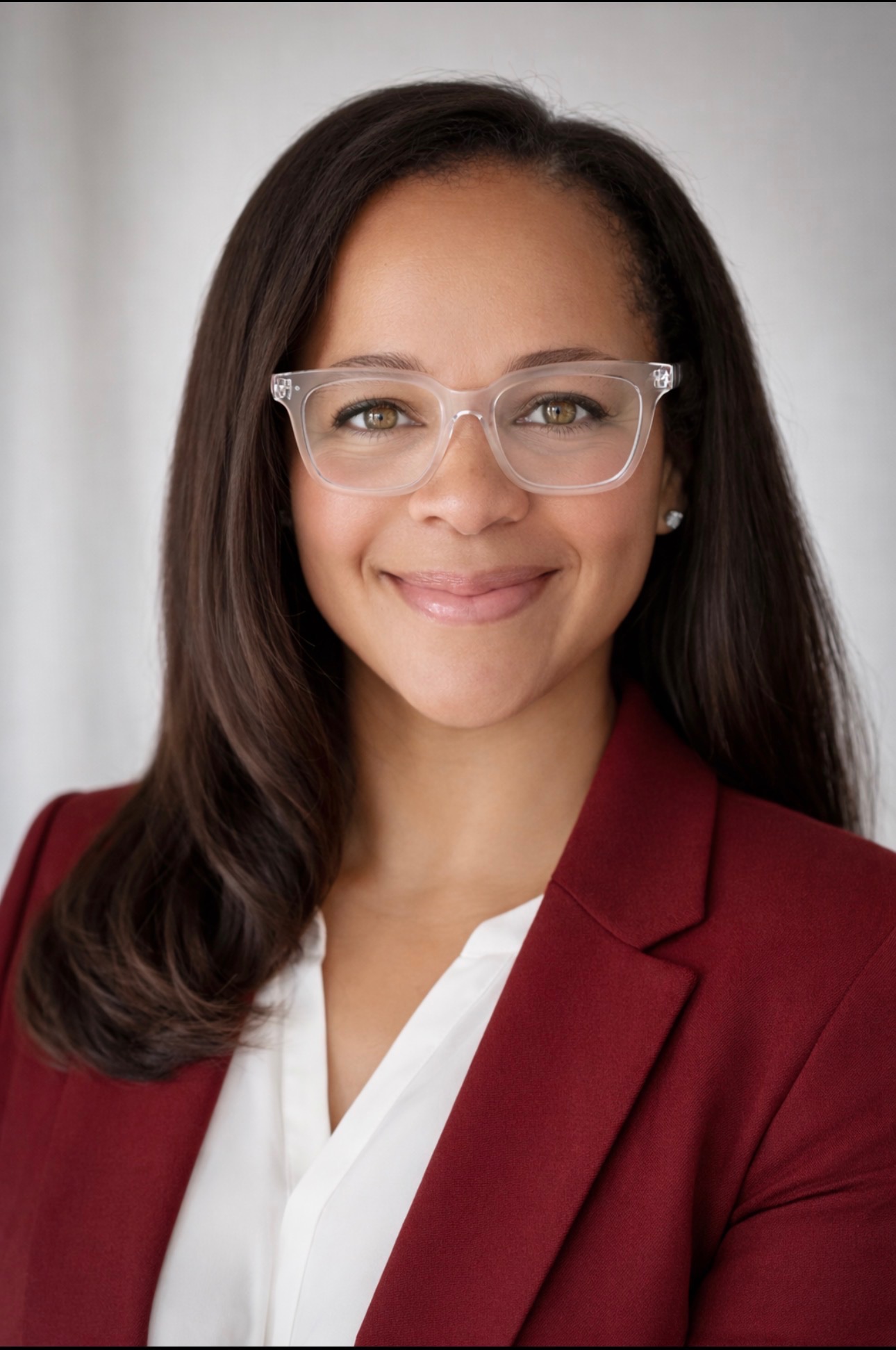
I am Korsha D. Mitchell, a strategy, operations, and transformation leader with more than two decades of experience helping organizations navigate complexity, improve how work gets done, and move important initiatives from intention to execution.
My career has taken me inside healthcare, government, education, manufacturing, nonprofit, logistics, supply chain, technology, customer experience, and communications environments. That range has given me an unusual view of organizations: I understand the strategy being discussed in the leadership meeting and the operational reality experienced by the people expected to execute it.
I have led and supported more than 150 strategic and transformation initiatives across 80+ organizations, spanning process improvement, technology adoption, organizational change, operational strategy, communications, and business transformation. Those organizations represent more than $9.2 billion in combined client revenue, with 95% of my consulting business generated through referrals and repeat relationships.
Today, my work also extends into global supply chain operations, where I manage complex, end-to-end initiatives across an international supplier and manufacturing network. It is work that requires operational discipline, stakeholder alignment, risk management, systems fluency, and the ability to keep multiple organizations moving toward the same outcome.
I also bring board governance experience, having served in senior governance and compliance leadership for a statewide, federally funded nonprofit organization, and I stay closely engaged with emerging technology, including AI adoption, as it reshapes how organizations operate.
That combination matters.
I do not approach transformation solely as a strategist, a process person, or a communications professional. I look at the whole operating environment: the people, the process, the systems, the information, the dependencies, and the decisions connecting them.
Because when something is not working, the problem is not always where it appears to be.
Education & Credentials
I hold both an MBA and a Master of Science in Supply Chain Management from the University of Oklahoma, completed concurrently as the university's inaugural dual-degree graduate. My MBA focused on strategy, finance, and organizational transformation; my MS-SCM focused on global operations, supply chain strategy, sustainability, Industry 4.0, and analytics.
My earlier education includes a Bachelor of Arts in Liberal Studies, with a focus in human behavior, systems thinking, and communication, and an Associate of Applied Science in Computer Information Systems, giving me an academic foundation that crosses business, human behavior, technology, and systems.
I am also a Lean Six Sigma Green Belt and continue to deepen my practice in organizational change, project leadership, and transformation.
How I Think About the Work
People are the purpose. Operations is how we deliver on it.
Processes, systems, technology, strategy, and structure matter. But organizations ultimately depend on people being able to understand the direction, make good decisions, and execute the work.
That is why I believe meaningful transformation requires both sides of the equation: the operational discipline to redesign how work happens and the human understanding to make that change possible.
My role is to help organizations see what is getting in the way, build what is missing, and create the conditions for people and operations to move forward together.